The environment you work in has a greater impact on your productivity than you might think. Noise, the lack of a permanent spot, or random interruptions can derail even the best-planned day. In a coworking space, where you share space with others, it’s worth adopting a few habits that will help you stay focused and finish the day feeling like you’ve actually accomplished something. Below is a checklist you can follow step by step.
Why your work environment affects productivity
The brain reacts to context—working in a chaotic, noisy place feels different than working in a space designed for specific tasks. Coworking has an edge over working from home precisely because it allows you to consciously choose a zone based on what you’re currently doing: silence for deep work, a room for calls, or an open space for less demanding tasks. The key is to actually use that flexibility instead of sitting in the same spot every time out of habit.
Before heading into the coworking space
Plan your daily priorities. Before you sit down to work, write down the 2–3 most important tasks that must get done. Everything else is a bonus. This way, even if the day gets complicated, you know what is non-negotiable.
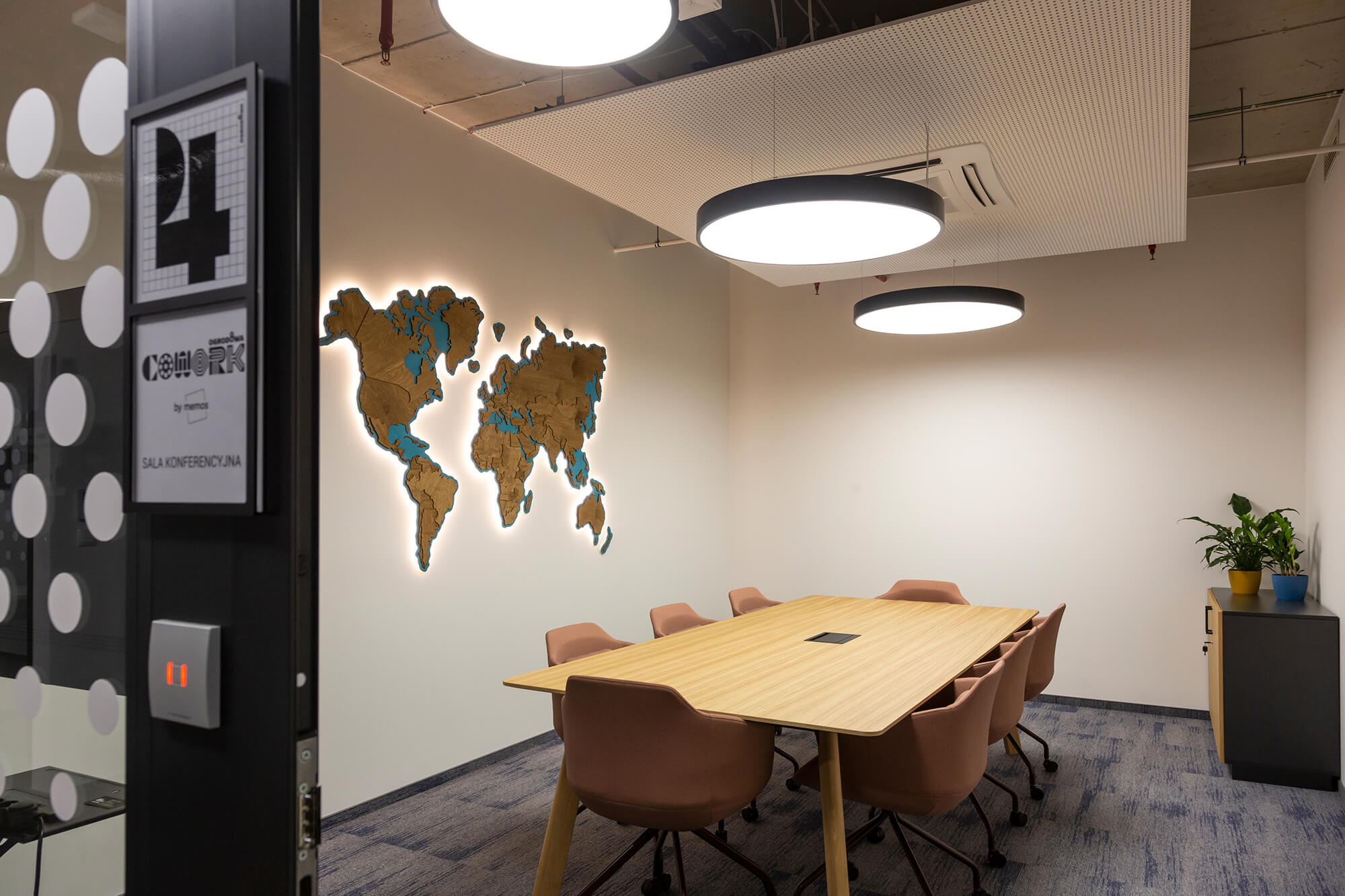
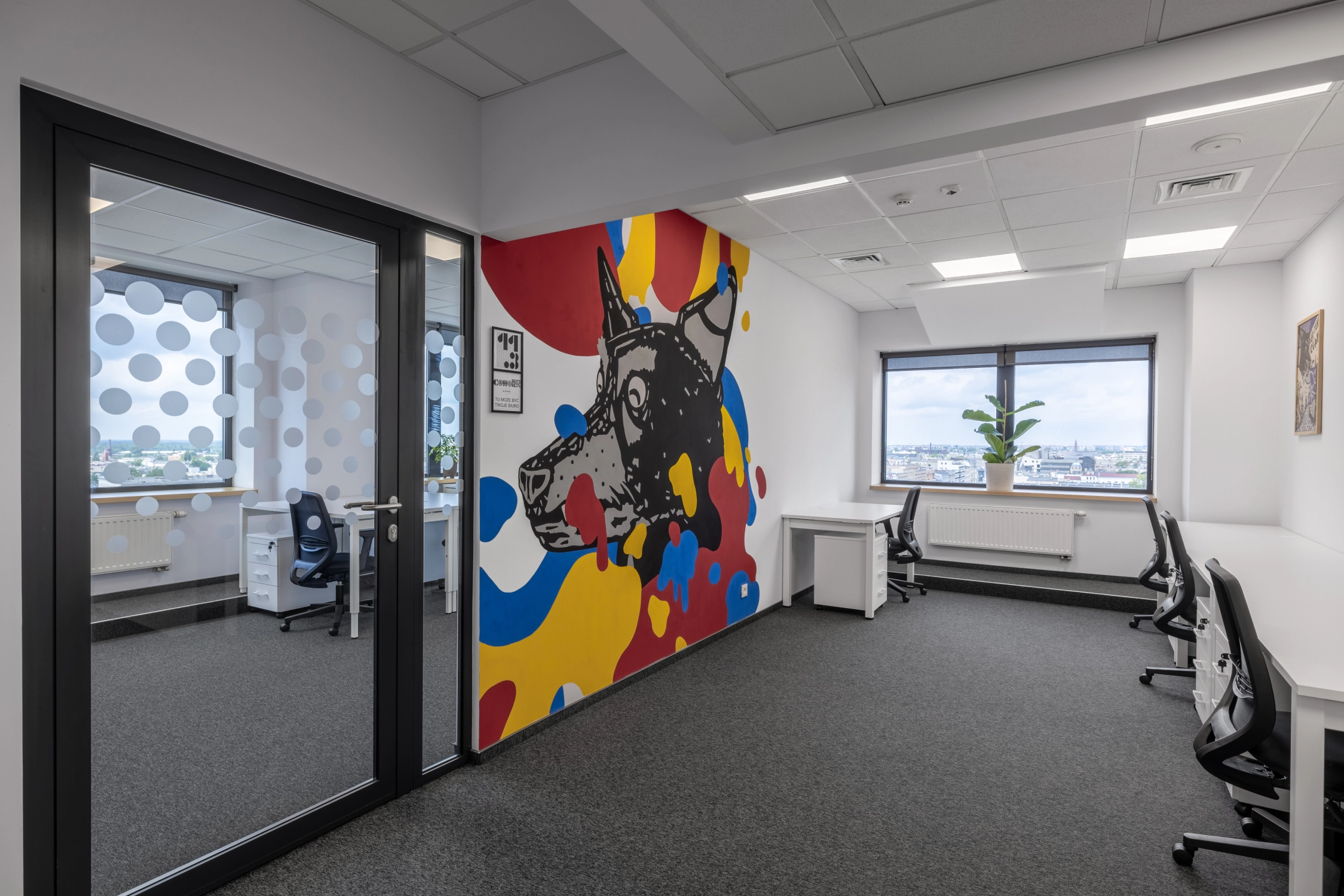
Book the right space. If you know you have a client call, a presentation, or a team meeting coming up, book a meeting room in advance—it only takes a few minutes and will save you stress on the day of the meeting. The same goes for a desk: if you need a long block of focused work, it’s better to plan for it rather than hoping for a random spot to be free.
During the workday
Block out time for deep work. The time-blocking method works exceptionally well in a coworking space—set 90–120 minute blocks without notifications or conversations, and use the breaks between them for emails or quick chats.
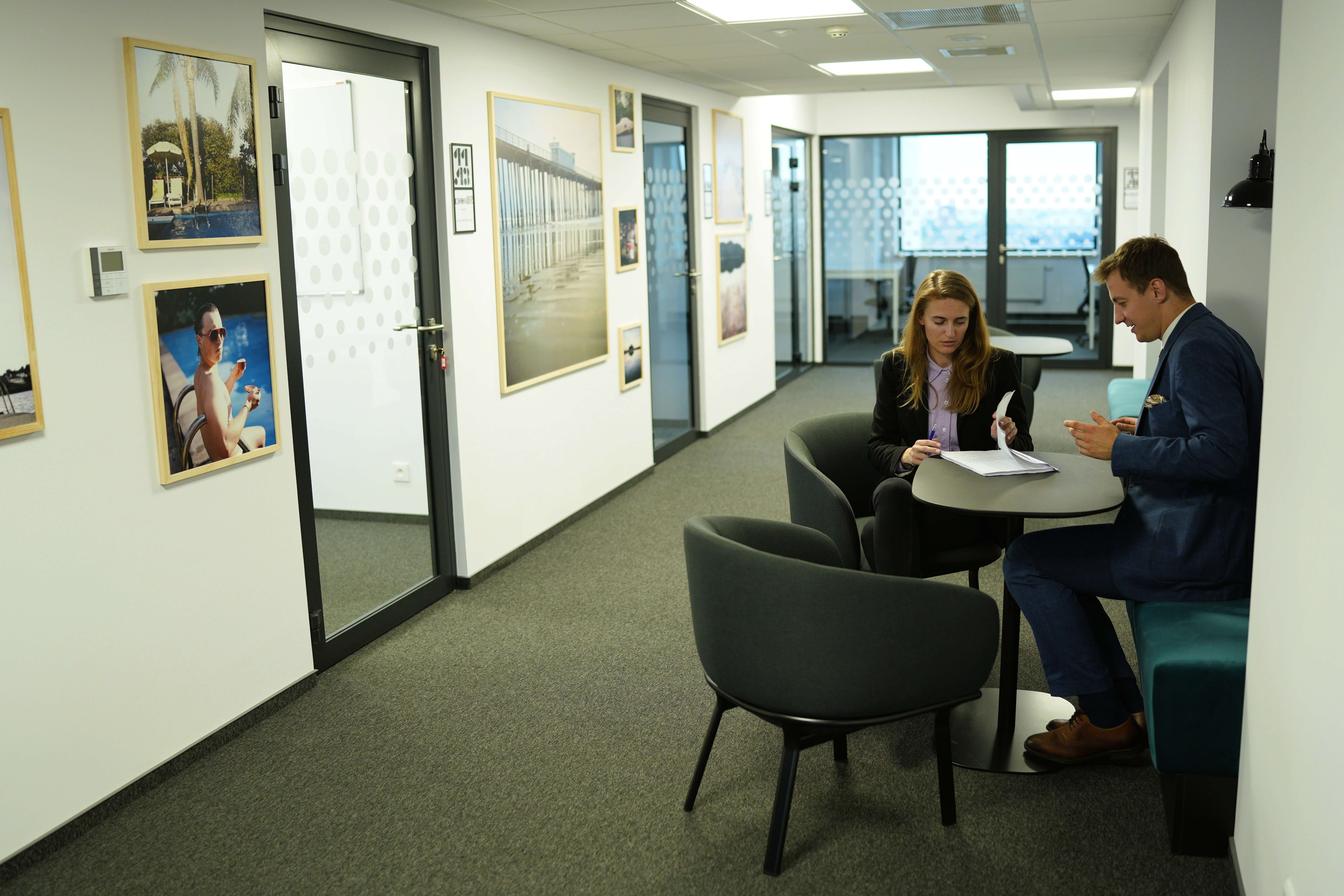
Use zones consciously. A good coworking space has designated areas for different types of activities—quiet corners for deep work, open spaces for less demanding tasks, and spots for conversations. Instead of sitting in one place all day, match your location to what you are currently doing.
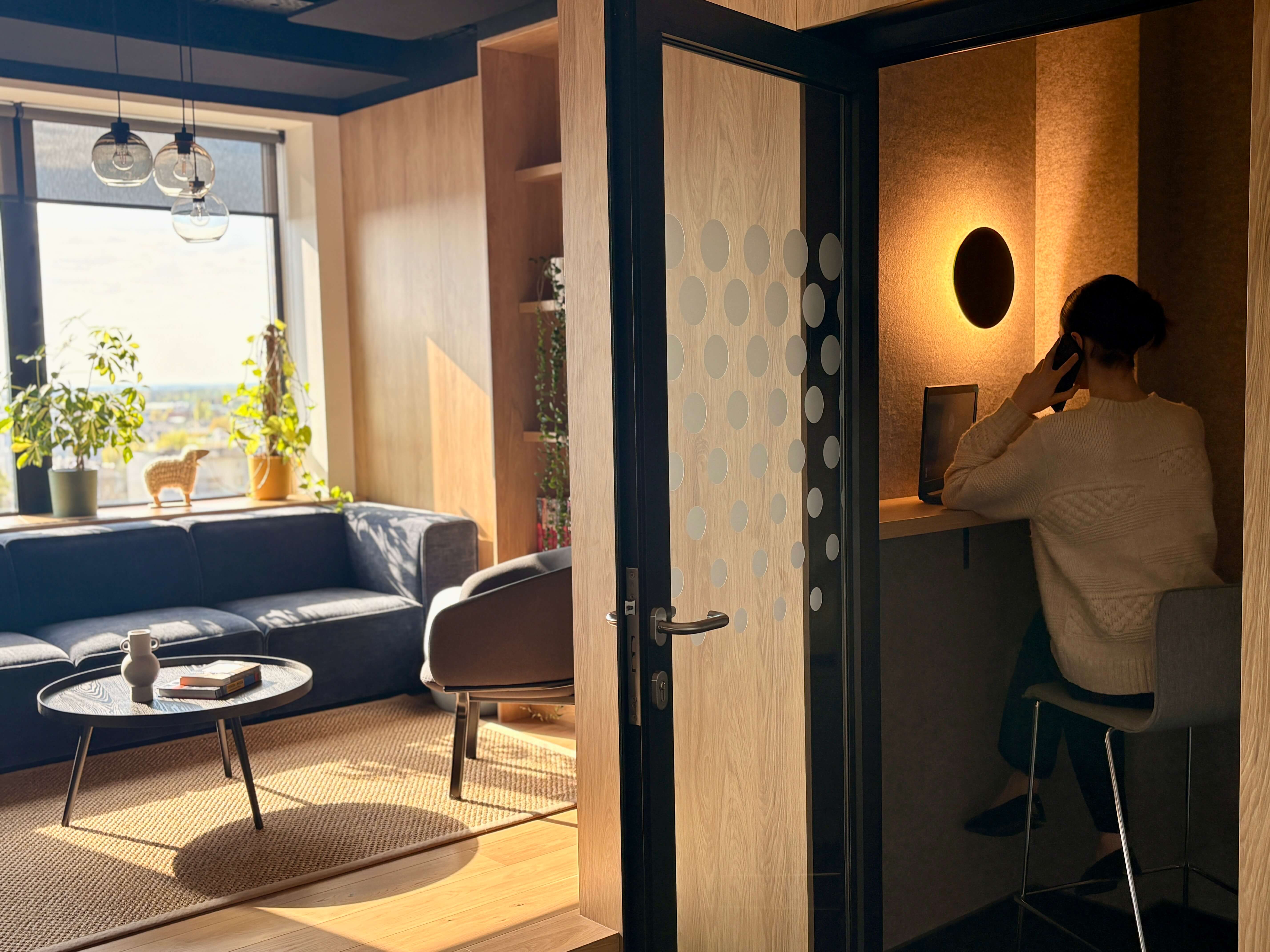
Know when to use a phone boothAnd what about a conference room? A short phone call or a quick chat doesn't require booking a room—a phone booth is enough. However, if the meeting involves more than two people or requires a presentation or a whiteboard, it's better to immediately book a conference roomso you don't have to improvise at the last minute.
Building a routine in a coworking space
Fixed hours or flexibility—choose consciously. Some people work best with a set routine (the same hours, the same place), while others need variety. Neither approach is inherently better—what matters is that it aligns with how you actually function, rather than how you think you "should" work.
Treat networking as a part of your day, not a distraction. Conversations in the kitchen or over coffee don't have to steal your time—they can be intentionally scheduled, for example, as a short break between work blocks. That is the difference between accidental distraction and building real business relationships along the way.
Tools and habits to support focus
A few simple things can significantly improve the quality of your day in a coworking space: noise-canceling headphones for deep work blocks, putting your phone on "do not disturb" during time-blocking, and a short start-of-day ritual—like reviewing your priorities over coffee before you dive into your first task. These are small things, but they build a sense of control over your day instead of just reacting to whatever happens.
Summary
An effective day in a coworking space isn't a matter of luck or mood—it's the result of a few simple habits: clear priorities, conscious choice of workspace, and time blocks for distraction-free work. The more intentionally you use what coworking has to offer, the easier it is to maintain a rhythm where your work actually moves forward.
Want to see how it looks in practice?Contact us and see what a workday at Cowork by Memos looks like.
FAQ
Is it worth booking a desk in advance?
Yes, especially if you are planning a longer block of deep work—it ensures you have a space tailored to your needs instead of leaving it to chance.
How long should a deep work block last?
90 to 120 minutes usually works best—long enough to truly engage with a task, but not so long that your concentration starts to drop.
Does networking in a coworking space really help with work, or is it just a distraction?
It depends on how you approach it. A consciously planned short conversation over coffee can be more valuable than an hour of working alone—it only becomes a problem when it happens randomly and without control over your time.